
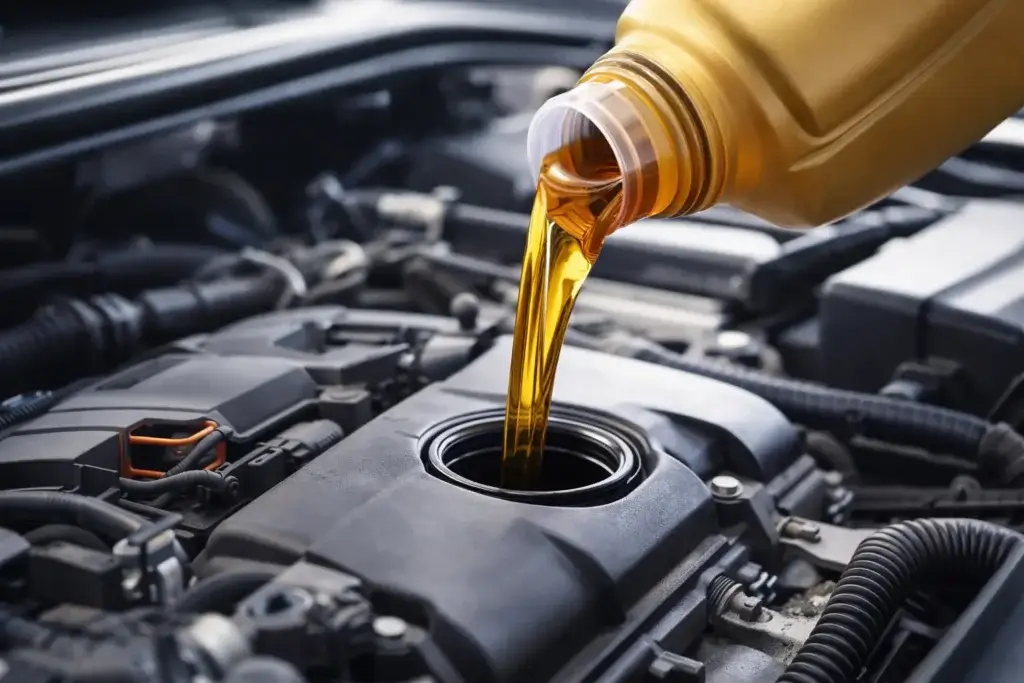
Not sure when to get the 1st oil change new car? Auto experts explain the ideal timing, myths, costs, and mistakes that could shorten your engine’s life.
Why the 1st Oil Change New Car Matters More Than You Think
Buying a new car is a major milestone. The engine is fresh, components are tightly assembled, and everything is engineered for peak efficiency.
But what many first-time owners don’t realize is this:
👉 The first few thousand miles are the most critical period of your engine’s life.
During this phase — often called the break-in period — tiny metal particles can accumulate as internal parts settle into place. While modern manufacturing has dramatically reduced this issue, it hasn’t eliminated it entirely.
Tesla Launches $41990 Tesla Model Y AWD in the U.S. — A Game-Changer for Affordable Electric SUVs?
That’s why the first oil change is less about routine maintenance and more about long-term engine protection.
Drivers who handle this step correctly often enjoy:
✅ Better fuel efficiency
✅ Smoother performance
✅ Lower long-term repair costs
✅ Higher resale value
Ignore it — and the consequences can follow your vehicle for years.
What Actually Happens Inside a Brand-New Engine
Even though today’s engines are built with incredible precision, microscopic friction still occurs when you first start driving.
Here’s what happens mechanically:
- Piston rings seat against cylinder walls
- Bearings polish themselves into optimal shape
- Gears establish wear patterns
- Heat cycles stabilize engine materials
Motor oil acts as both a lubricant and a cleaning agent, capturing particles before they cause damage.
Changing that oil at the right time essentially resets the system — giving your engine a cleaner environment for the next several thousand miles.
So, When Should You Get the First Oil Change?
The old-school advice — changing oil at 1,000 miles — largely comes from an earlier era of automotive engineering.
Today’s answer is more nuanced.
Typical Recommendation for Modern Vehicles
| Driving Condition | Suggested First Oil Change |
|---|---|
| Normal commuting | 5,000–7,500 miles |
| Mostly highway driving | Around 7,500 miles |
| Heavy traffic / stop-and-go | Closer to 5,000 miles |
| Towing / extreme weather | 3,500–5,000 miles |
👉 Always check your owner’s manual first.
Manufacturers design engines differently, and their guidance should override generalized advice.
Why You Should NOT Change It Too Early
Surprisingly, changing oil too soon can be unnecessary — and sometimes wasteful.
Modern factory-fill oil often contains additives specifically designed to support the break-in process.
Draining it prematurely may:
- Remove beneficial friction modifiers
- Provide no measurable performance gain
- Increase ownership costs
Unless your automaker explicitly recommends an early change, patience usually pays off.
The Biggest Myth U.S. Drivers Still Believe
Myth: “New cars don’t need maintenance for a long time.”
Reality?
Even the most advanced engines still rely on clean lubrication.
Another widespread misconception is that dealership reminders are purely upsells. While service departments do generate revenue from maintenance, oil life monitoring systems in modern vehicles are often highly accurate.
Many cars now track:
- Engine temperature
- Driving speed
- Idle duration
- Load stress
This data helps calculate the ideal time for service — not just a generic mileage number.
Synthetic Oil Has Changed Everything
If you purchased a new vehicle recently, there’s a strong chance it already uses full synthetic oil.
Why synthetic oil lasts longer:
- Resists thermal breakdown
- Flows better in cold weather
- Maintains viscosity under stress
- Reduces engine deposits
This is the primary reason service intervals have expanded over the past decade.
However, “longer-lasting” doesn’t mean “ignore it.”
Waiting too long remains one of the fastest ways to shorten engine life.
Warning Signs You Shouldn’t Ignore
Even before hitting the recommended mileage, your car may signal it’s ready for fresh oil.
Watch for:
⚠️ Engine running louder than usual
⚠️ Slight burning smell
⚠️ Dashboard oil indicator
⚠️ Reduced fuel economy
⚠️ Dark, gritty oil on the dipstick
If you notice multiple signs, scheduling service early is a smart move.
How Much Does the First Oil Change Cost in the U.S.?
| Oil Type | Average Cost |
|---|---|
| Conventional | $40–$65 |
| Synthetic Blend | $55–$80 |
| Full Synthetic | $70–$120 |
| Luxury / Performance Vehicles | $120–$200 |
Some dealerships even include the first service free — a perk worth confirming after purchase.
Compared to engine repairs that can exceed $4,000, this is one maintenance task where cutting corners rarely makes financial sense.
Should You Go to the Dealership or an Independent Shop?
Both options can be valid — but there are strategic differences.
Dealership Advantages
- Factory-trained technicians
- Correct oil specification guaranteed
- Maintenance records help resale value
- Software updates often included
Independent Shop Benefits
- Usually cheaper
- Faster appointments
- More flexibility
For the very first oil change, many experts suggest sticking with the dealership — at least while the vehicle remains under warranty.
Documentation matters more than most owners realize.
Driving Style Impacts Oil Life More Than Mileage
Two drivers can own identical vehicles and still need oil changes at completely different intervals.
Aggressive acceleration, frequent short trips, and heavy cargo loads all increase engine stress.
If your daily routine involves:
- Urban congestion
- Rideshare driving
- Food delivery
- Extreme climates
You may fall into what mechanics call the “severe driving” category — even if it feels normal.
In those cases, earlier service is often the safer strategy.
Expert Insight: Think Long-Term, Not Just Scheduled Maintenance
Automotive specialists often emphasize one principle:
👉 Engines rarely fail suddenly — they wear down gradually.
Clean oil slows that wear dramatically.
Drivers who stay proactive typically experience:
- Fewer mechanical surprises
- Better reliability after 100K miles
- Stronger trade-in value
The first oil change sets the tone for your entire ownership experience.
Treat it as an investment, not an expense.
Smart Tips Most First-Time Owners Don’t Know
✔️ Check oil monthly during the first year
✔️ Keep every maintenance receipt
✔️ Use only manufacturer-approved oil grades
✔️ Don’t rely solely on mileage — consider time (6–12 months max)
✔️ Warm the engine briefly before hard acceleration
These habits take minutes but can extend engine life by years.
Is Skipping the First Oil Change Ever Safe?
Short answer: No.
Even if the vehicle appears to run perfectly, degraded oil quietly reduces lubrication efficiency.
The damage isn’t immediate — which is why many drivers underestimate the risk.
But over tens of thousands of miles, it compounds.
The Future: Oil Changes May Become Less Frequent
As engine technology evolves, some automakers are experimenting with extended intervals approaching 10,000 miles.
Improved filtration systems and smarter onboard diagnostics are driving this shift.
Still, physics hasn’t changed — friction exists, and lubrication remains essential.
For now, consistent maintenance is still the safest path.
FAQs
How soon is too soon for the first oil change?
Anything below roughly 3,000 miles is typically unnecessary unless specified by the manufacturer.
Can I wait 10,000 miles?
Only if your vehicle explicitly supports it and your driving habits are mild.
Does the first oil change improve performance?
Not directly — but it protects the engine, helping maintain peak performance longer.
Is synthetic oil worth the extra cost?
For most modern vehicles, yes. It offers superior protection and longer intervals.
What happens if I delay it?
Oil loses viscosity, collects debris, and becomes less effective — accelerating engine wear.
Final Take: One Small Decision That Protects a Massive Investment
Your new car may represent one of the biggest purchases you’ll make this decade.
The first oil change is a simple step — yet it plays a major role in determining how reliably that vehicle serves you over time.
Follow the manual.
Pay attention to driving conditions.
Stay proactive.
Do that, and your engine will likely reward you with years of smooth, dependable performance. For more discussion on this matter you can visit reditt car discussion.